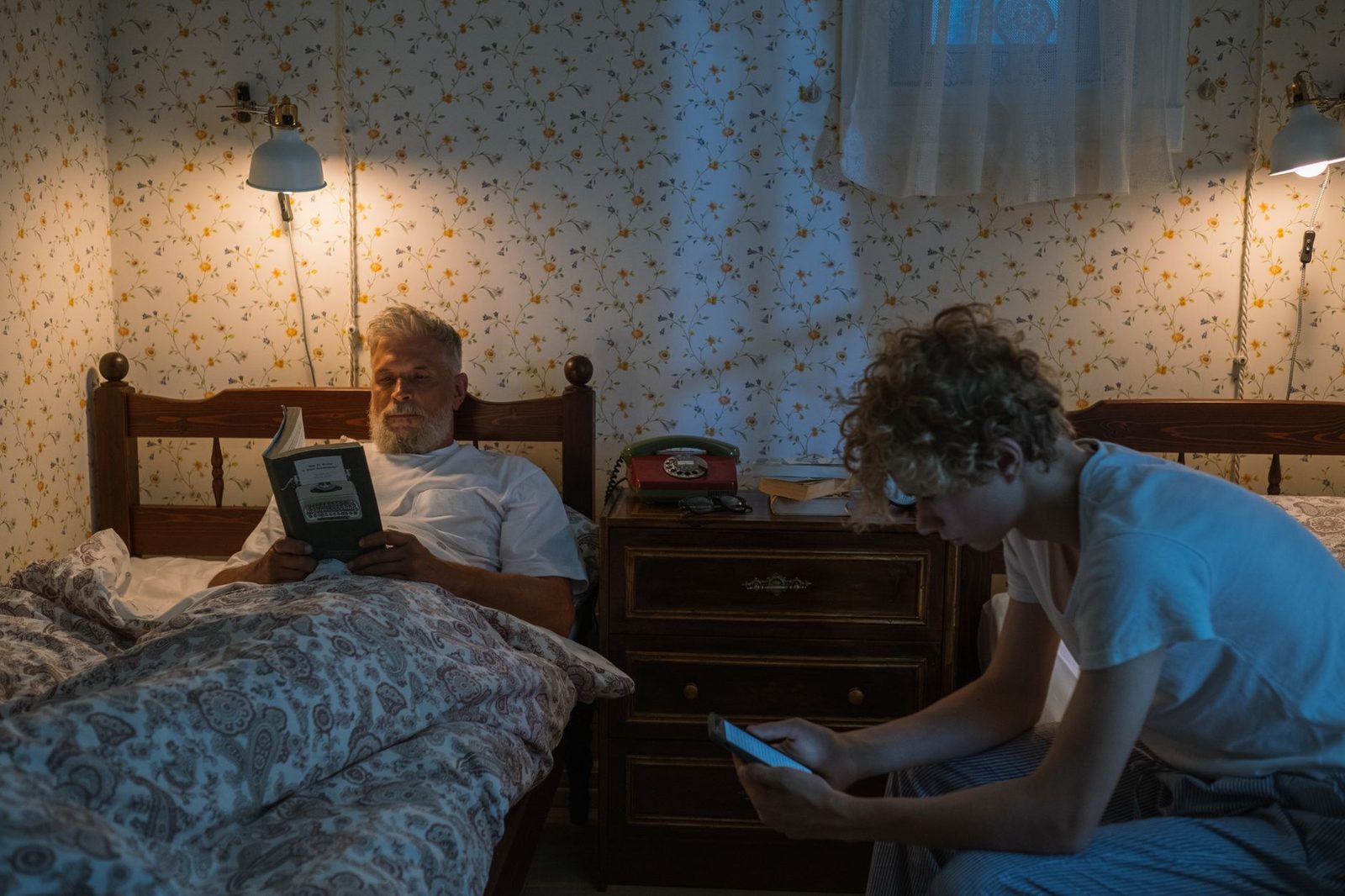
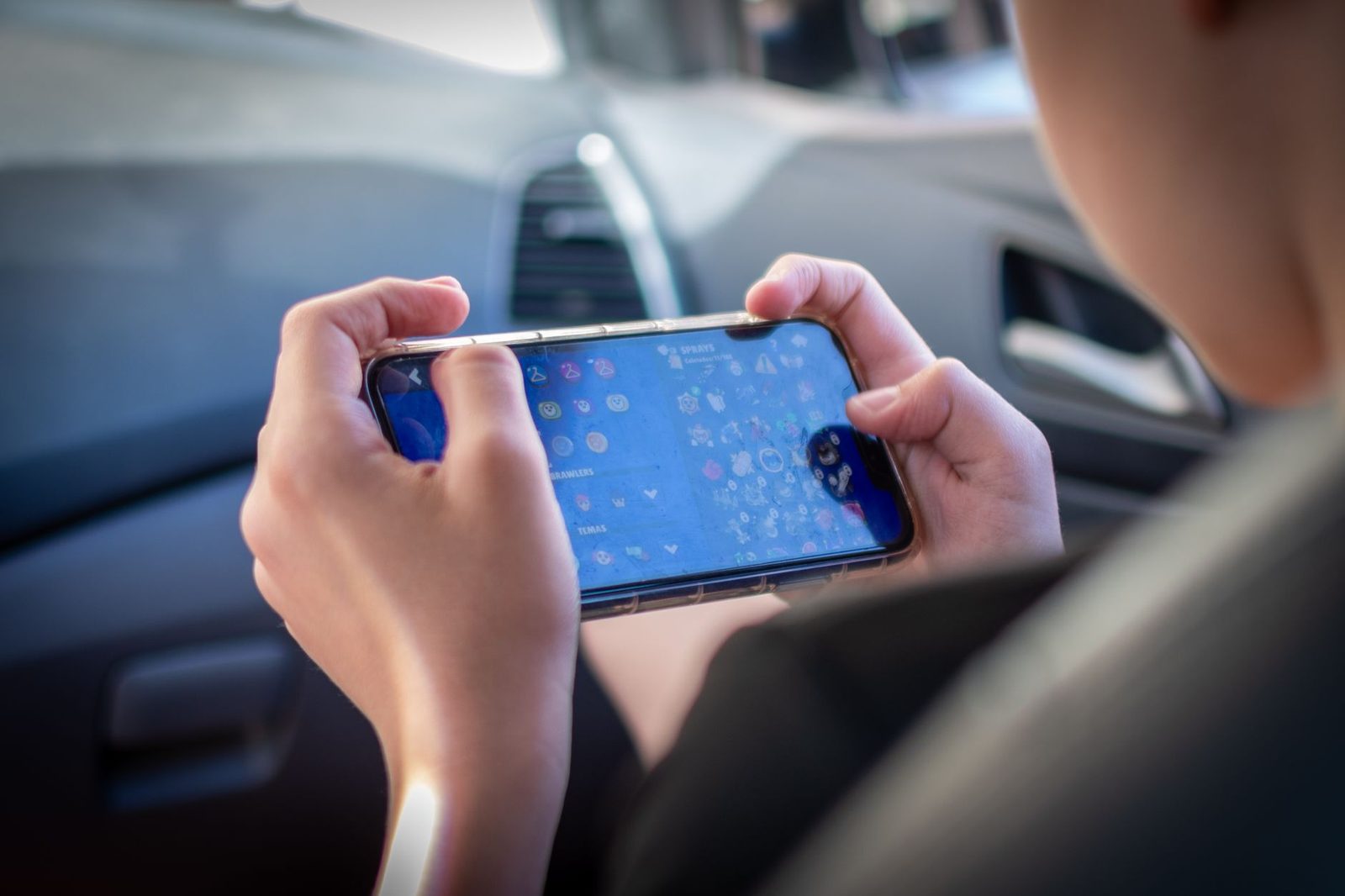
In Morocco, as of October 2026, Omegle-style random video chat platforms — Chatrandom, Camsurf, Chatspin, OmeTV, Azar, Flingster — are not blocked: they open on a Maroc Telecom, Orange Maroc or Inwi connection with no special workaround. What drives searches for "chatroulette Morocco" is therefore not censorship of these platforms, but three very concrete legacies: the VoIP block of January 2016, still lodged in people's memories and habits; weak upstream bandwidth on entry-level mobile plans; and a daily rhythm that crowds connections into a narrow window, late in the evening.
The question "does video chat work in Morocco?" shows up in our search statistics in two forms that absolutely must be kept apart: "is it allowed?" and "why does my picture keep cutting out?". The first belongs to telecoms regulation, the second to network physics. Confusing the two leads to wrong answers — and sometimes to hunting for a workaround where there is nothing to work around.
This briefing, dated October 2026, is based on what is public and verifiable: statements from the Agence nationale de réglementation des télécommunications (ANRT), its quarterly market dashboards, measurements from the Open Observatory of Network Interference (OONI) and Internet Society reports on the 2016 episode.
For the other constrained-access cases we have documented, see our briefings on Algeria and internet shutdowns, Egypt, VoIP and mobile data and Turkey and its blocked apps. Four neighbouring countries, four different mechanisms.
1. January 2016: the episode that explains everything
What happened
On 6 January 2016, Morocco's three operators — Maroc Telecom (IAM), Orange Maroc (then Méditel) and Inwi — simultaneously cut off voice and video calls made through messaging apps: Skype, WhatsApp, Viber, Facebook Messenger, FaceTime. Text messages kept working; only the VoIP layer (voice and video over IP) was filtered.
The ANRT justified the measure by explaining that these services were providing telephony without holding an operator licence, and therefore without meeting the corresponding obligations (interconnection, quality of service, universal service contribution). The operators, for their part, were watching their international call termination revenues evaporate.
The reaction was massive: campaigns to boycott mobile plans, a collapse in downloads of the operators' apps, mobilisation by consumer associations and digital-sector professionals. Weeks later the service came back — gradually, operator by operator — and the ANRT announced a consultation process. Since 2017, VoIP has once again been accessible in Morocco on all three networks.
Why it still matters in 2026
Ten years on, the episode still produces two measurable effects.
A belief effect. Some Moroccan internet users remain convinced that "video calls are banned". We regularly receive searches phrased exactly that way. It is false in 2026, but the belief shapes behaviour: some people reach for a VPN out of reflex, when nothing technically justifies it for a random video chat site.
A capacity effect. Moroccan networks were long designed for downstream traffic (downloads, video on demand), not for sustained upstream traffic — which is precisely what video chat requires, since every participant streams continuously. The catch-up came with 4G and then 5G, but it remains uneven from area to area.
Key point: in Morocco, the constraint in 2026 is not legal, it is a matter of capacity. That is not the same thing, and the fix is not the same either.
2. What is accessible in October 2026
Random video chat sites are not on any blocklist
Morocco does not publish an official list of blocked sites, but independent OONI measurements, run continuously from probes installed on Moroccan subscriber lines, show no filtering of the domains of the main random video dating platforms. In concrete terms, as of October 2026:
| Platform | Access type | Status observed in Morocco |
|---|---|---|
| Chatrandom | Browser + app | Accessible |
| Camsurf | Browser + app | Accessible |
| Chatspin | Browser | Accessible |
| OmeTV | App (stores) | Accessible, subject to age rating |
| Azar | App (stores) | Accessible, subject to age rating |
| Flingster | Browser | Accessible |
| CamCamCam | Browser | Accessible |
For the two mobile apps — Azar and OmeTV — the real variable is not the Moroccan operator but the app store: Apple and Google are the ones that decide availability and age ratings country by country. We set out that mechanism in detail in our briefing on Azar, OmeTV and the app stores.
What remains regulated
Three points do fall under Moroccan law and are non-negotiable:
- Law 09-08 on the protection of individuals with regard to the processing of personal data, overseen by the CNDP (Commission nationale de contrôle de la protection des données à caractère personnel);
- the Moroccan Penal Code, which penalises the distribution of pornographic content and offences against public decency — a random video chat site is not a lawless space;
- Law 103-13 of 2018 on violence against women, which explicitly criminalises the non-consensual distribution of images and harassment by electronic means.
In other words: accessing a random video chat site from Casablanca or Marrakech is legal. What you do there remains subject to ordinary law, as everywhere else.
3. The real constraint: upstream bandwidth
The ANRT figures
The ANRT publishes a quarterly dashboard of the telecoms market. Two findings shape how video chat is used in Morocco:
- the mobile internet base vastly exceeds the fixed base: the great majority of Moroccan connections are made from a smartphone, over mobile data;
- fixed broadband remains concentrated along the Casablanca–Rabat–Tangier corridor and in the major cities, with fibre expanding but a still-substantial ADSL base.
The practical consequence: many Moroccan video chat sessions run over a smartphone's 4G, in an apartment, sometimes via tethering. Yet a random video chat site needs a stable upstream of roughly 1 to 1.5 Mbit/s for a decent picture, and above all consistent latency. A 4G link at 30 Mbit/s down but an unstable 2 Mbit/s up will produce choppy video — even though the speed test will display a flattering number.
The three typical symptoms
A picture that pixelates every ten seconds. The signature of fluctuating upstream bandwidth. On Wi-Fi it is often not the line but a saturated radio channel: in the dense apartment blocks of Casablanca or Salé, the 2.4 GHz band is congested. Switching to 5 GHz, or plugging in a cable, solves a good part of the problem. A USB-to-Ethernet adapter costs less than changing your subscription and turns an unstable session into a usable one.
Sound arriving before the picture. That is normal: platforms prioritise audio when bandwidth runs short. It means you are at the limit. Lowering your outgoing resolution in the platform's settings, where that option exists, stabilises everything.
The cut-off after two minutes. Often a network handover: the phone switches from Wi-Fi to mobile data, or from one cell tower to another. A wired connection or a fixed spot in the home avoids these handovers.

The gear that genuinely makes a difference
In Morocco as anywhere else, the quality gap between two people on a call rarely comes down to the platform. Three items make the difference, in this order:
- Sound. The front camera of a recent smartphone is good enough; its microphone is not, as soon as there is street noise, a fan or a television nearby. A wired USB headset eliminates echo and background noise better than any software setting. We devoted a whole briefing to echo and background noise.
- Device stability. Holding your phone at arm's length for twenty minutes gives you a swaying picture and a sore arm. An adjustable phone stand on the desk solves both.
- Lighting. In a typical Moroccan living room, light comes from the ceiling: it hollows out the eyes and darkens the lower face. An adjustable desk lamp placed behind the screen, slightly off to one side, is enough — no studio kit needed.
4. Who is online, and when
The Moroccan window
Morocco has been on UTC+1 all year round since 2018 (no more seasonal changes, apart from an adjustment during the month of Ramadan). That puts the country in the same time zone as France in winter, and one hour behind in summer — a detail that matters a lot if you want to chat in French.
Moroccan connections cluster in a narrow window:
| Window (Rabat time) | Observed density | Note |
|---|---|---|
| 8 a.m. – 1 p.m. | Low | Work, school |
| 1 p.m. – 4 p.m. | Medium | Long lunch break, mobile usage |
| 4 p.m. – 8 p.m. | Medium to high | Coming home, network busy |
| 9 p.m. – 1 a.m. | High | The real peak, but the mobile network is saturated |
The paradox is a familiar one: the hour with the most people online is also the hour when the mobile network is most congested. For a first session, 10 p.m. on Wi-Fi remains the best compromise. During the month of Ramadan the rhythm flips completely — we covered that in detail in our briefing on Ramadan and connection windows.
Speaking French, Arabic or Darija
Morocco is one of the countries where random video chat works best from a language standpoint, because many users move freely between Darija, Modern Standard Arabic, French and often Spanish in the north. On the platform side, country and language filters remain rough and ready: announcing your language in an opening line is still more effective than any filter.
For those who use these platforms as a language practice ground, a pocket vocabulary notebook kept next to the keyboard changes the nature of your sessions: you jot down the turns of phrase you hear instead of forgetting them. That is the approach we describe in our article on improving a foreign language with strangers.

5. VPNs: what Moroccan law says
An important point, because a lot of half-truths circulate. Morocco does not ban the use of a VPN. No provision of Law 24-96 on posts and telecommunications, nor any ANRT text, prohibits encrypting a personal connection. Moroccan companies use VPNs daily.
That does not mean a VPN is useful here. Since random video chat sites are not blocked, a VPN unblocks nothing; it adds a detour, hence latency, and often degrades video quality. Its only genuine benefit is privacy with respect to the local network — a use case we addressed in our briefing on anonymity and privacy.
Two hardware precautions, on the other hand, are always worth taking, whatever the country:
- a stick-on webcam cover on your laptop, to physically close the lens between sessions;
- a check of what is behind you before you switch the camera on: a letter, a licence plate visible through the window, a framed diploma with your full name. That is the subject of our briefing on what your background says about you.
Frequently asked questions
Are random video chat sites blocked in Morocco in 2026?
No. Chatrandom, Camsurf, Chatspin, OmeTV, Azar, Flingster and CamCamCam all open on a Moroccan connection as of October 2026. No filtering of these domains is documented by independent OONI measurements.
Do WhatsApp and Skype calls work in Morocco?
Yes. The VoIP block decided in January 2016 was lifted gradually, and voice over IP has been accessible on all three operators since 2017. The opposite belief persists, but it no longer matches reality.
Why is my video poor quality when my speed is good?
Because the figure that matters for a video call is the upstream rate, not the downstream figure shown by speed tests. A mobile plan can deliver 40 Mbit/s down and less than an unstable 2 Mbit/s up, which is enough to break up the picture.
Do I need a VPN to use a random video chat site from Morocco?
Technically no, since nothing is blocked. A VPN adds latency and degrades video. It is only justified for privacy reasons on a shared network, never to "unblock" these platforms.
What time are the most Moroccans online?
Between 9 p.m. and 1 a.m., Rabat time. That is also when the mobile network is busiest: a Wi-Fi or wired connection is preferable in that window.
Can a minor use these platforms in Morocco?
The terms of service of virtually all of these services set a minimum age of 18, and the mobile versions are rated for adults by the app stores. See our briefing for families on minors and parental controls.
In summary
- No random video chat site is blocked in Morocco as of October 2026: censorship is not the issue.
- The VoIP block of January 2016, lifted since 2017, keeps feeding a mistaken belief that there is a ban.
- The real constraint is upstream bandwidth and mobile congestion at peak hours, not regulation.
- The Moroccan presence peak falls between 9 p.m. and 1 a.m. (UTC+1); Wi-Fi or a cable is strongly preferable then.
- A VPN is not banned but brings nothing here, other than latency.
- Ordinary law applies: Law 09-08 on personal data, Law 103-13 on the non-consensual distribution of images, and the Penal Code.
- Three modest investments — a headset, a stand and an adjustable lamp — improve a session's quality more than the choice of platform.
To compare with the other countries we track, our briefings on Algeria, Egypt, Turkey and Ukraine each set out a different access mechanism. The country and alternative pages on Lovycam bring them all together.