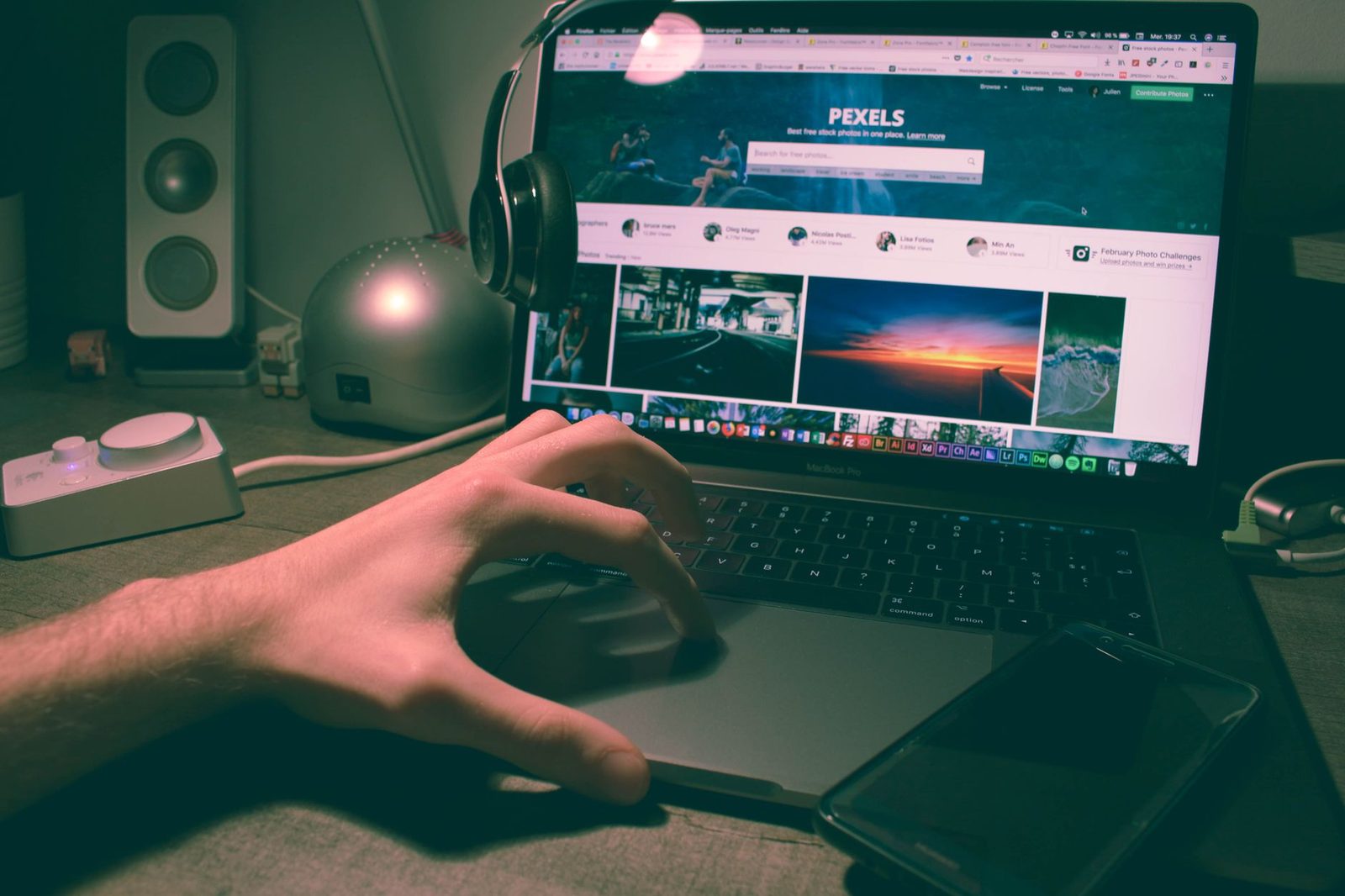
CamCamCam is a "lightweight" web chatroulette: no official mobile app on the stores, no mandatory account, one button to land on a random stranger and another to move on to the next. In October 2026 the site remains accessible from a browser in most countries, but it is an opaque platform: the operator's identity is poorly documented, moderation is essentially reactive, and traffic depends on the time of day. Usable — provided you know exactly what you will find there, and what you won't.
The name comes up constantly in searches, often spelled "cam cam cam", sometimes confused with half a dozen clones. And yet almost nobody publishes a dated, honest description of it. That is the point of this article: a CamCamCam profile for 2026, covering what can be verified, what cannot, and what that concretely means for someone connecting from Algiers, Tunis, Casablanca, Cairo, Istanbul or Lyon.
Three parts: what the platform is technically, what is known about its operation and moderation, then real-world country-by-country access and the habits to adopt. For a full overview of the sector, see our comparison of alternatives and the dedicated CamCamCam profile.

1. What CamCamCam is, technically
A browser chatroulette, nothing more
CamCamCam belongs to the family of web chatroulettes: a website, not an app. You open a page, allow camera and microphone access, get placed in a matching queue, then get connected to another user online at the same moment. A "next" button breaks the connection and restarts the search. This is the model invented by Chatroulette in 2009 and replicated since by Camsurf, Chatspin, Chatrandom, OmeTV and Flingster.
The practical consequences of this "web-only" choice are very concrete:
- No presence on the stores. Neither the App Store nor Google Play lists an official CamCamCam app. Any "CamCamCam app" found on a third-party store or as an APK should be considered unofficial — this is the classic vector for unwanted software on Android.
- No notifications, no persistence. You never "find" anyone again: if the conversation is cut off, it is lost. This is a session-based usage model, not a messaging service.
- Total dependence on the browser. The platform relies on WebRTC, the building block that enables live audio and video inside a browser. An up-to-date browser (Chrome, Edge, Firefox, a recent Safari) is the baseline requirement; on an old iOS Safari, stream dropouts are frequent.
Sign-up, data, and what you leave behind
The stated appeal of this kind of platform is the absence of an account: you come in, you talk, you leave. But "no account" does not mean "no data". A random video chat service collects, at the very least, your IP address (essential to establishing the connection), a session identifier, and almost always advertising trackers, since the business model rests on advertising and sometimes on links to paid services.
This is a point we have detailed elsewhere: your rights of access, erasure and objection exist as soon as the service addresses users in the European Union, and the GDPR makes no exception for sites without registration. If the subject concerns you, revisit our article on Chatroulette and the GDPR: the same principles apply word for word to CamCamCam, with one added difficulty — identifying the data controller.
Simple rule: on a chatroulette with no clear legal notices, assume you have no practical recourse. Act accordingly — in other words, broadcast nothing you would not broadcast in public.
What the interface does and does not allow
In 2026, web chatroulettes have standardised around four features: a country filter (often paid), a gender filter (often paid or illusory), a parallel text chat, and a report button. CamCamCam sticks to the bare essentials: matching is largely random, and targeting options are weak compared with Chatspin or Chatrandom, which explicitly monetise those filters.
For a beginner, that simplicity is an advantage: nothing to configure. For anyone looking for a specific audience — French speakers, a particular time slot, a given language — it is a clear limitation. Our article on the best time to log on retains all its value here: on a platform with no filters, the only targeting lever left to you is timing.
2. Who runs it, and how it is moderated
A deliberate opacity, and not one specific to CamCamCam
Let us be blunt: in October 2026, we found no verifiable company information prominently published by CamCamCam (legal name, country of establishment, data protection contact). That is the case for a large share of second-generation chatroulettes, built as low-running-cost advertising sites.
By way of comparison, the sector offers every degree of transparency:
| Platform | Type | Store app | Operator transparency |
|---|---|---|---|
| Chatroulette | Web | No | Public founder, published policy |
| Camsurf | Web + app | Yes | Identified publisher, published rules |
| Chatspin | Web + app | Yes | Identified publisher, paid plans |
| OmeTV | Web + app | Yes | Identified publisher, active moderation |
| CamCamCam | Web | No | Low, poorly documented |
This table is not a ranking of experience quality: it is a scale of traceability. It matters the day you want to report illegal content, request the deletion of a piece of data, or simply know which law applies.
Moderation: reactive, not preventive
On account-free chatroulettes, moderation rests on three pillars, in decreasing order of effectiveness:
- User reporting, which only works if you use it before clicking "next" — once the session is cut, the link to the incident is often lost.
- Automatic image detection, which filters the most obvious cases but misses manipulation, persistence or requests for money.
- IP or browser fingerprint blocking, bypassed in three minutes by anyone who wants to.
We have described in detail what actually happens after a click on "report" in our article on chatroulette moderation. On a poorly documented platform like CamCamCam, assume the handling time is long and the feedback non-existent. The operational consequence: your first line of defence is you.
Two common-sense moves are enough to cover 90% of the material risk. The first: an adhesive webcam cover stuck over the lens and slid shut as soon as the session ends — we have devoted a whole article to it. The second: cutting the sound physically rather than in software, which is far more reliable with a USB headset fitted with an inline switch than via an on-screen button you forget about.
The audience: who is actually on the other side
No platform of this kind publishes audited demographics, and figures announced without a methodology should be treated with suspicion. What is consistently observed across the sector, however, is a massive imbalance in favour of men, a majority of very short sessions (a few seconds), and attendance peaks in the evening and at weekends, aligned with European time zones between 9 p.m. and 1 a.m.
For a French speaker in the Maghreb or Egypt, that alignment matters: the time difference with France is zero to two hours depending on the season, which makes the European slot perfectly usable. We go into the time slots and the language question on our chat with French people page.
3. Country-by-country access in October 2026
A website, so an easy target — but rarely targeted
National blocks hit apps and identified VoIP services first, far more than mid-sized random chat websites. That is why CamCamCam remains, in practice, reachable in places where better-known apps have disappeared from local stores.
- Algeria. Video chat on the web remains broadly accessible, but for years the country has been carrying out scheduled internet shutdowns or slowdowns during the baccalaureate exams, in June, to combat exam paper leaks. During those windows, no platform works properly, CamCamCam included. Details and schedule on our Algeria page.
- Morocco. The memory of the 2016 standoff over VoIP calls (Skype, WhatsApp, Viber) still shapes habits, even though calls work today. Browser-based video chat sites are not specifically targeted. See Morocco.
- Egypt and the Gulf. VoIP and certain calling apps have been subject to lasting restrictions in several Gulf states, with wide differences from one country to another and successive relaxations. A WebRTC site often gets through, but its quality depends on local peering quality — that is where you see video streams freezing for no apparent reason.
- Turkey. The country applies app removals and targeted restrictions, which pushes users towards web equivalents; hence the volume of searches for "apps similar to Chatspin". See Chatspin and Turkey.
- Ukraine. The constraint is not censorship of video chat but infrastructure: power cuts, air-raid alerts and curfews shift connection hours to late afternoon. We explain this on Ukraine.
Important reminder: this article describes access situations; it offers no means of circumventing a legal ban. When a platform is banned in your country, the answer is not a technical one.
What actually breaks, and what is not a block
Nine "blocks" out of ten are nothing of the sort. Before concluding that CamCamCam is inaccessible where you are, rule out the mundane causes:
- Browser permissions: a camera refused once stays refused for that domain.
- An overly aggressive ad blocker, which breaks the matching script.
- A mobile network behind symmetric NAT, which prevents the direct stream from being established. Simply switching to Wi-Fi often fixes it; with a distant router, a Wi-Fi 6 repeater or a flat Ethernet cable changes more than switching platforms.
- Insufficient upstream bandwidth: it is your upload that carries your image, not your download.
For the full diagnostic walkthrough, see unblocking your webcam and stabilising your connection.
Is it worth your time?
Honestly: CamCamCam is a decent option for a quick taste of random video chat, with no registration and no installation. It is not a good choice if you are looking for a targeted French-speaking audience, responsive moderation, or someone you can find again tomorrow. In those three cases, platforms with accounts and apps are better suited, and we compare them in our 2026 alternatives guide.
A final word on comfort, which weighs on session length more than people think: most of the people who give up after ten minutes do so because of their hardware, not the platform. A 1080p webcam with light correction, set at eye level on an adjustable monitor stand, transforms the impression you make far more reliably than switching sites. And if you are putting in several evenings in a row, a book on non-verbal communication teaches you more about the first minute of a conversation than fifty clicks of "next".
Frequently asked questions
Is CamCamCam free?
Basic access is, as on most web chatroulettes: funding comes from advertising. Be wary of pages demanding a bank card to "verify your age" or "unlock the girls": that is the classic pattern of redirection towards third-party paid services, not a platform feature.
Is there a CamCamCam app?
No, there is no official app listed on the App Store or Google Play as of October 2026. APK files bearing that name should be avoided.
Is CamCamCam safe?
Technically it is no riskier than any other chatroulette; on the other hand, the operator's opacity and reactive moderation call for caution. No full name, no social media, no scene you would not show in a public place, and an immediate report before moving on to the next person. See also spotting scams and sextortion.
Is it allowed for minors?
No. Like its competitors, the platform declares itself adults-only, but without serious age verification. That is precisely what parents need to know: read Chatroulette and minors.
Why do I only ever land on men?
Because that is the statistical reality across the whole sector, and it is even more pronounced on platforms without filters. Changing the time you log on has more effect than changing site.
In summary
- CamCamCam is a web chatroulette with no account and no app: easy to access, poor in targeting features.
- The operator is poorly documented as of October 2026: no legal name or data protection contact is put forward.
- Moderation is reactive: your report only has value if it is sent before you click "next".
- Access remains broad in Algeria, Morocco, Egypt, the Gulf and Turkey, because blocks target apps and VoIP first; in Algeria, the baccalaureate shutdowns are an exception, and in Ukraine it is electricity that dictates the hours.
- Before crying "blocked", check permissions, ad blocker, mobile network and upstream bandwidth.
- To go further: Lovycam, the CamCamCam profile and the glossary.