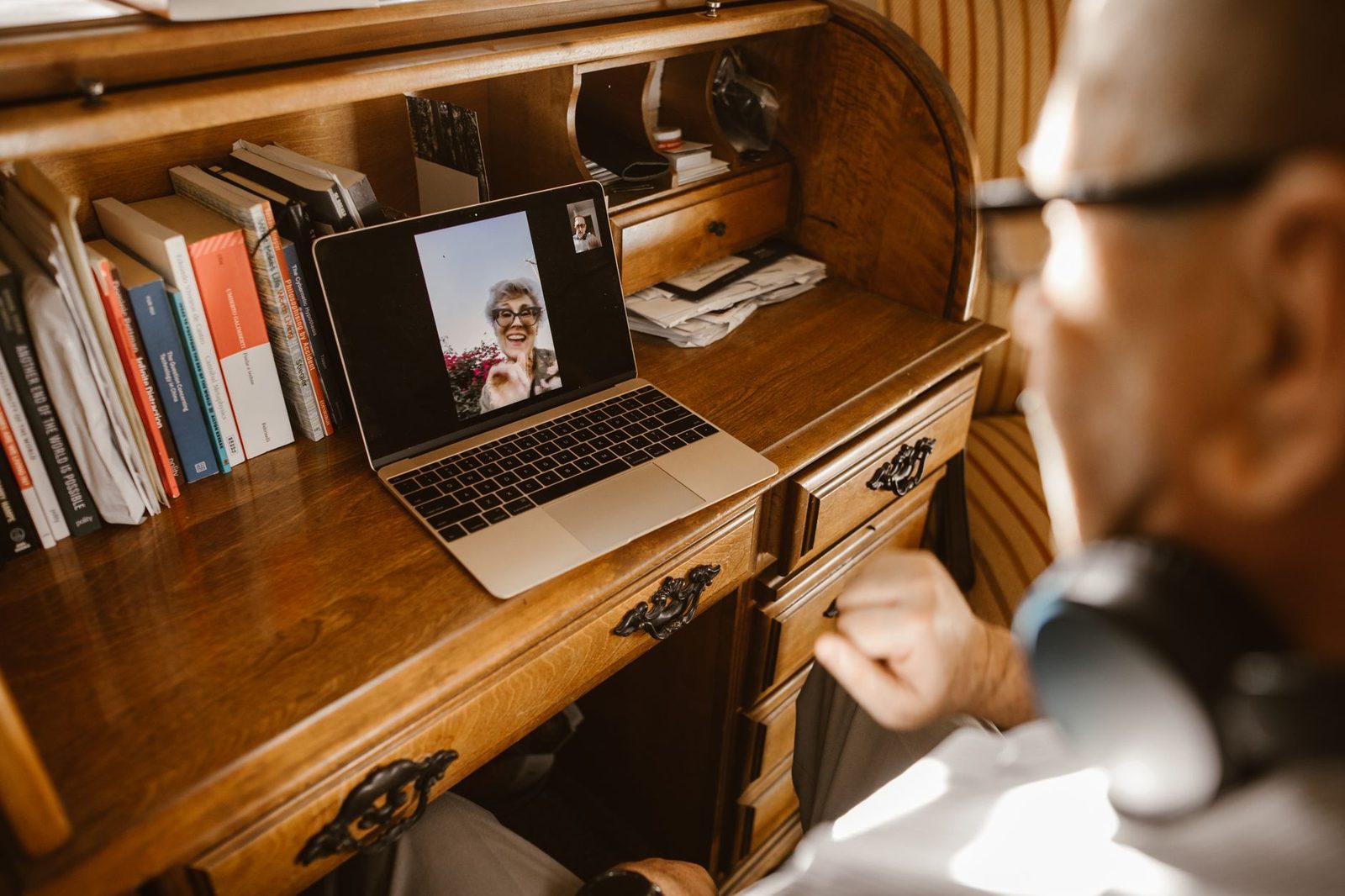
You open a chat roulette site on a Tuesday evening at 9 p.m. from Lyon. Statistically, there's a good chance the person on the other side is having lunch, leaving work, or just getting up. You share neither their day, nor their season, nor their cultural references. And yet you say "hey, how's it going?" as if they were the neighbour down the hall.
We've already written about the time you log on and about the language barrier. But there's a layer missing underneath: the real geography of these platforms. Not the fantasy of "the whole world one click away", but the concrete distribution of users — heavily lopsided, heavily male, heavily concentrated in a handful of countries.
Understanding that map changes everything. It explains why you keep running into the same profiles, why certain time slots are deserted, and why a joke that lands in Marseille falls flat in front of a student in Manila.

The "whole world" myth: what the audience figures say
Chatroulette, launched in late 2009 by Andrey Ternovskiy, a 17-year-old from Moscow, hit its media peak in spring 2010. At the time, the New York Times and The New Yorker (in Julia Ioffe's profile, May 2010) were already describing an audience dominated by North Americans and Europeans, and overwhelmingly male. The figure that made the rounds online came from an RJMetrics analysis published in March 2010: across a sample of several thousand connections, roughly 47% of users were American, followed by Germany, France and the United Kingdom — and nearly 9 out of 10 users were men.
Sixteen years later, the platforms have changed names, but the demographic structure remains surprisingly stable on Western services:
- a large male majority (the ratios reported by platforms or measured by third parties generally fall between 70% and 90% men);
- concentration in a few markets: the United States, India, Turkey, Brazil, Western European countries;
- a young median age, overwhelmingly under 35.
Apps that came out of Asia, on the other hand, have shifted the centre of gravity. Azar, launched in 2014 by South Korea's Hyperconnect (acquired by Match Group in 2021 for around $1.725 billion — a deal publicly announced by Match Group in February 2021), claimed more than 540 million downloads at the time of the acquisition, with a user base located mostly outside the United States, notably in Asia, the Middle East and Europe.
In other words: depending on which platform you open, you're not fishing in the same pond. A "classic" chat roulette site will put you in front of Europeans and North Americans; an Asian mobile app will connect you more often to India, Turkey or Indonesia.
The time zone map, your best tool
This is the point almost nobody exploits. A chat roulette site is populated by the people who are awake and available at the moment you log on. The rest of the world is asleep.
Do the maths from mainland France (UTC+1 in winter, UTC+2 in summer):
| Your time (Paris) | Who's having their evening elsewhere |
|---|---|
| 3 p.m. – 5 p.m. | India, Southeast Asia (end of day), Middle East |
| 6 p.m. – 8 p.m. | All of Europe, Turkey, North and West Africa |
| 9 p.m. – 11 p.m. | Europe, Brazil (late afternoon), US East Coast |
| midnight – 2 a.m. | United States (evening), Canada, Mexico |
| 3 a.m. – 6 a.m. | US West Coast (late evening), Australia (morning) |
This table is more useful than it looks. If you're trying to practise English, logging on at midnight puts you in front of relaxed Americans with a drink in hand. If you'd rather stay inside a French-speaking bubble, the 8 p.m. – 10 p.m. Paris slot concentrates France, Belgium, French-speaking Switzerland, and part of Quebec in its late afternoon.
And if you're the type to string together late-night sessions, comfort quickly becomes a practical issue: a pair of blue-light blocking glasses and a desk lamp with adjustable colour temperature will do more for the quality of your exchanges at 1 a.m. than any conversation trick.
What culture changes in the first thirty seconds
The biggest misunderstanding on international chat roulette sites isn't linguistic: it's pragmatic. It's the implicit rules of conversation that differ, not the vocabulary.
Anthropologist Edward T. Hall, in Beyond Culture (1976), popularised the distinction between high-context cultures (where much is conveyed implicitly, through the unsaid and the relationship) and low-context cultures (where information is explicitly verbalised). Geert Hofstede's work on cultural dimensions — power distance, individualism, uncertainty avoidance — remains, despite the methodological limits debated ever since, a useful reading grid.
In practice, on a webcam:
- Silence. A five-second pause feels like a failure in France or the United States. It's perfectly normal, even polite, in several East Asian cultures. Don't hit "next" on someone just because they're thinking.
- The direct question. "So what do you do for a living?" is a standard opener in North America. Elsewhere it can come across as intrusive, especially where someone's employment situation is a sensitive subject.
- The smile. A study led by Kuba Krys (Polish Academy of Sciences) and published in 2016 in the Journal of Nonverbal Behavior showed that in certain countries — Iran, India, South Korea, Russia — smiling at a stranger can be read as a sign of dishonesty or naivety, not goodwill. The "American smile" is not universal.
- First names. Across much of the Arabic- and Spanish-speaking world, asking for someone's first name early is warm. In Nordic cultures, it's often perceived as unnecessary pressure.
None of this can be learned in a single evening. But a short guide to intercultural communication — the kind of book international sales reps read — will teach you more about your failed conversations than ten tutorials on "how to flirt on video chat".
Country filters: what they actually do
Almost every platform now offers a location filter, often behind a paywall. You should know what you're buying.
What gets filtered is the IP address, not nationality or language. The immediate consequences:
- A French student on Erasmus in Lisbon shows up as Portuguese.
- Anyone using a VPN — and there are plenty on these platforms, for entirely legitimate privacy reasons — appears wherever their tunnel exits, not where they live.
- Filtering for "France" therefore guarantees neither the French language nor French culture: you'll also get tourists, expats and users of French VPN servers.
The filter is still useful for avoiding absurd time slots and cutting down the noise. But it doesn't "deliver" you a country. And if the filter comes bundled into a subscription, always check the actual commitment period and how to cancel: video dating platforms rely heavily on automatic renewal.
The special case of the French-speaking world
A common mistake among French-speaking users: looking for "France" when the language pool is far wider. According to the Organisation internationale de la Francophonie (report La langue française dans le monde, 2022 edition), there are roughly 321 million French speakers worldwide, with growth driven by sub-Saharan Africa — Senegal, Côte d'Ivoire, Cameroon, the DRC, Morocco, Algeria, Tunisia.
For a French speaker, that opens up a time window few exploit: Dakar, Abidjan and Douala are at UTC+0 or +1, only one or two hours off from Paris. Kinshasa is at UTC+1. Montreal is six hours behind: your 9 p.m. is their 3 p.m., and their evening starts when you're going to bed.
Adjusting how you come across when talking to people abroad
A few simple adjustments noticeably improve the share of conversations that last longer than a minute with a non-French-speaking partner.
Slow down and articulate. It's not a matter of volume but of pace. French speakers talk fast, swallow word endings and chain their liaisons together. To a foreign ear, that's a wall. Cut your speed by 20% and mark the ends of your sentences.
Look after the audio before the picture. On an international connection, bandwidth is the first casualty: sound degrades before video, and degraded sound + an accent = total incomprehension. A USB noise-cancelling headset costs less than a month of premium subscription and makes a far bigger difference.
Use text as backup. Most chat roulette sites offer a parallel text chat. Typing out a tricky word, a city name or a number unlocks conversations that were about to die. It's also a safety net when the other person's accent escapes you.
Show rather than describe. An object, an instrument, a pet, the view out of your window: visuals cross languages. That's the great advantage of video over text chat, and it's massively underused.
Avoid reference-based humour. Jokes about French politics, TV shows or local celebrities only work within a 500-kilometre radius. Situational humour, on the other hand, travels.
Jet lag applies to you too
There's a lot of talk about the other person's time zone, never about your own. And yet the typical chat roulette user is a night owl: sessions stretch out because "next" is endless and there's no natural stopping signal.
France's Institut national du sommeil et de la vigilance (INSV) and Santé publique France regularly repeat the same recommendations: reduced light exposure in the evening, consistent bedtimes, and caution with screens in the hour before sleep. A session that starts at 11 p.m. "for ten minutes" and ends at 2 a.m., three nights a week, produces a genuine sleep debt, with the documented effects on mood, attention and — ironically — the quality of your social interactions the next day.
Two simple guardrails:
- Set an end time before you start, not during. A kitchen timer sitting next to your keyboard, with no screen and no notifications, does the job better than a phone alarm you keep snoozing.
- Choose your slot based on your goal, not your insomnia. If you want to speak English, schedule a session from 10 p.m. to 11 p.m. rather than defaulting to waiting until 2 a.m.
The takeaway
A chat roulette site isn't a window onto "the world". It's a window onto the people who are awake, connected, mostly young and mostly male, in a handful of countries, at the precise moment you click. That's far less romantic — and far more actionable.
In short:
- The time you log on determines your geography. Change the hour, you change continents.
- The country filter filters IPs, not cultures or languages.
- Conversational codes vary: silence, smiling and the direct question don't mean the same thing everywhere.
- The French-speaking world isn't limited to France: West Africa shares almost your time zone, Quebec is six hours behind.
- Audio beats video as soon as an accent enters the picture.
Next time you open a chat roulette site, ask yourself one question before hitting "start": who's awake, right now? The answer will shape your evening far more reliably than your lighting or your shirt.